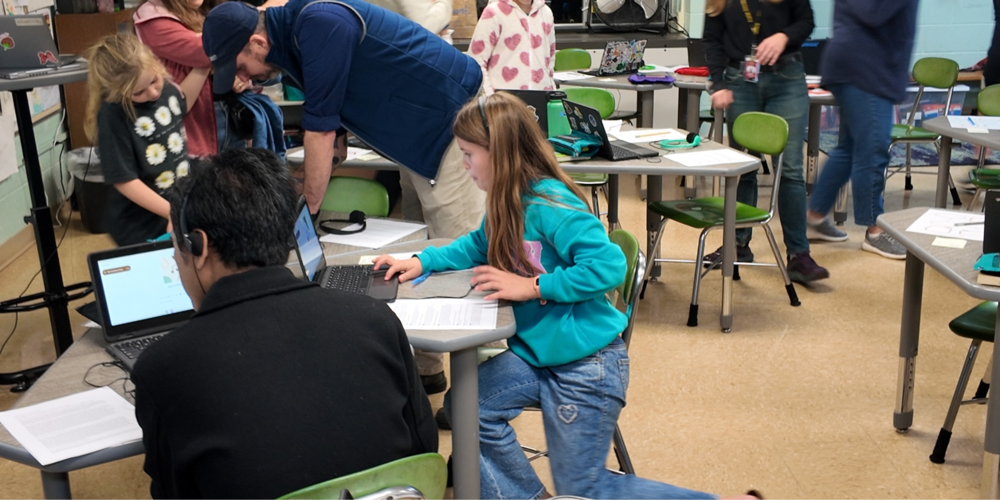
Which parts of our identity do we decide for ourselves, and which parts do others decide for us? Fifth-grade students at Cayuga Heights Elementary School (CHES) explored that question through a recent oral history project, interviewing caregivers and teachers about the experiences, traditions, and stories that shape who they are. On November 4, they shared their recordings and transcripts with families and classmates, who were invited to listen and leave handwritten comments at each student’s desk.
The project was created by Krystina Clary, a special education teacher at CHES. Students in both fifth-grade classes participated, with support from classroom teachers Erin Brackett and Kimberly Williamson.
Writing personal narratives is a fifth-grade standard, but Clary recognized that it could be a challenging place to begin the school year, particularly for students with Individualized Education Plans (IEPs). Writing for extended periods requires focus and sustained energy, which can be difficult during the first weeks of school. The oral history component offered students another way to explore their stories and identities before translating those experiences into writing.
The idea grew out of Clary’s own experience interviewing her grandfather in high school for a family history project. She saw an opportunity to connect that experience with the identity component of the fifth-grade curriculum.
Students selected an identity theme to explore, such as the origin of their name, a family connection, a meaningful experience, a hobby or interest, a cultural or ethnic tradition, or a personality trait. They then learned how to ask open-ended questions and developed a set of seven questions for their interviewee.
Students interviewed a caregiver or teacher and recorded the interview using Soundtrap on their Chromebooks. The recordings were later transcribed, providing a starting point for the next unit: writing personal narratives.
Throughout the project, students shared stories about when they were younger, stories they had heard about themselves, and even a few that were funny or a little embarrassing. By family night, students were eager to hear what their classmates had recorded.
For Clary, seeing how students responded to one another was the most meaningful part of the experience.
“To see the children’s enthusiasm was really special,” she said. “They were vulnerable, engaged, and excited to hear what their friends had recorded. I was very proud of the students for not using that vulnerability against each other. They were very respectful and really just wanted to learn more about their classmates.”